


I have been down 30ish pounds since starting my journey at the gym with the help and support of Gaven and Jay.
Trained by Gaven−30 lbs since August
GLP-1 Support — Toronto
GLP-1 weight loss, without losing the muscle
The medication handles your appetite. It does nothing to decide whether the weight coming off is fat or muscle — and in the STEP 1 trial, roughly 40% of it was lean mass. That part is training, protein, and measurement. That part is us.
Arzadon Fitness is a personal training studio, not a medical clinic. We do not prescribe, supply, dose, or advise on GLP-1 medication, and nothing on this page is medical advice. We work alongside the physician who manages your prescription — never in place of them.
The Problem
The scale is the wrong instrument for this
Down eighteen pounds is not a result. It is a number with two very different stories behind it. Eighteen pounds of fat is the outcome you paid for. Twelve pounds of fat and six pounds of muscle is a slower metabolism, a weaker body, and a rebound waiting to happen — and the bathroom scale reports both of them identically.
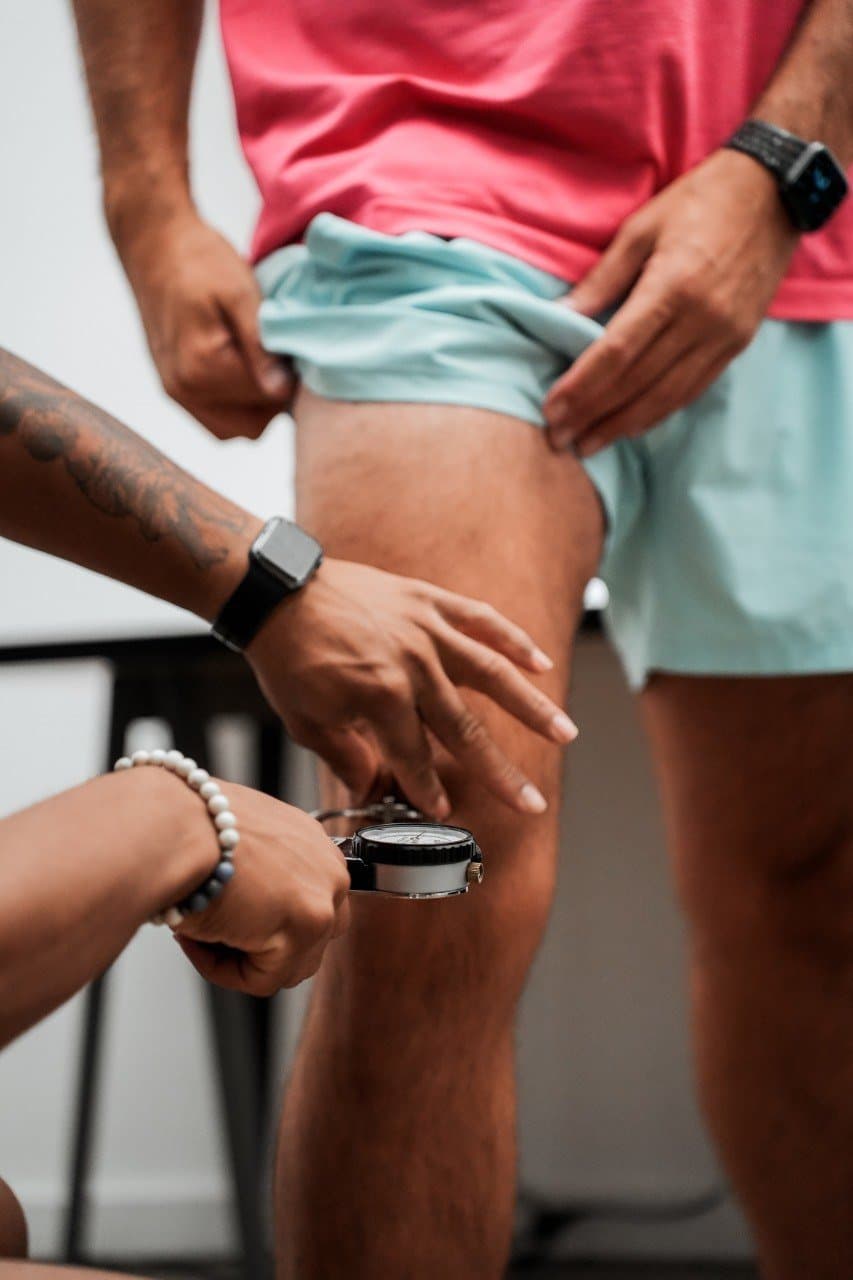
An InBody 770 scan separates the two. It takes about sixty seconds, and it is the difference between knowing what is happening to your body and hoping.
Get Your Baseline Scan — $167The Protocol
What we actually do
Five things, in this order. None of them involve the medication itself.
01
Baseline before the weight starts moving
An InBody 770 scan and a movement screen, ideally before your first dose — or as early into the course as we can get you. Without a starting lean-mass number, nothing that follows is measurable, and "am I losing muscle?" stays a feeling instead of a fact.
02
Resistance training, twice a week minimum
Progressive overload is the signal that tells the body the muscle is still needed. Remove the signal during a steep caloric deficit and the body reads the muscle as surplus. This is the single highest-leverage thing you can do while on a GLP-1, and it is not cardio.
03
Protein built around a suppressed appetite
Appetite suppression is the point of the medication and the main obstacle to keeping muscle. Most people on a GLP-1 badly under-eat protein without noticing. Your coach builds intake around the window where you can actually eat, rather than handing you a meal plan you will not finish.
04
Re-scan every two weeks
Fat mass and lean mass, tracked separately. If lean mass starts falling, that is a programming problem — and we find it in fourteen days rather than in six months, when the mirror finally tells you.
05
A plan for coming off
Most people do not stay on a GLP-1 forever. What you keep afterwards is whatever you built while you were on it: the muscle, the training habit, and a maintenance intake you have actually practised. That off-ramp is designed from the start, not improvised at the end.
Who Books This
Three points on the same curve
Earlier is better in every one of them — but none of them is too late.
On a GLP-1 right now
The scale is dropping and you have no idea what is actually coming off
You are losing weight, and it is working. But nothing you can see tells you how much of it is fat and how much is the muscle you spent years building. One scan answers it.
About to start
You want a baseline before the first dose
This is the best possible moment to walk in. A scan now gives every future scan something to be compared against — and the training is in place before the deficit arrives, not bolted on after the damage.
Came off — and it came back
You stopped, the weight returned, and you are heavier in fat than when you began
This is the common ending, and it is a body-composition story: the muscle left with the fat, the metabolism came down with it, and the regain landed as fat. Rebuilding lean mass is the way out, and it is slower than losing it was. Start now.
Start here
Transformation Blueprint$167
Duration90 minutes
You leave withInBody 770 baseline + program
Location460 Richmond St W, Toronto
King West · Toronto
Where The Line Is
We are the gym half of this. Your doctor is the other half.
What Arzadon does
- Measure lean mass and fat mass separately, at baseline and every two weeks (InBody 770)
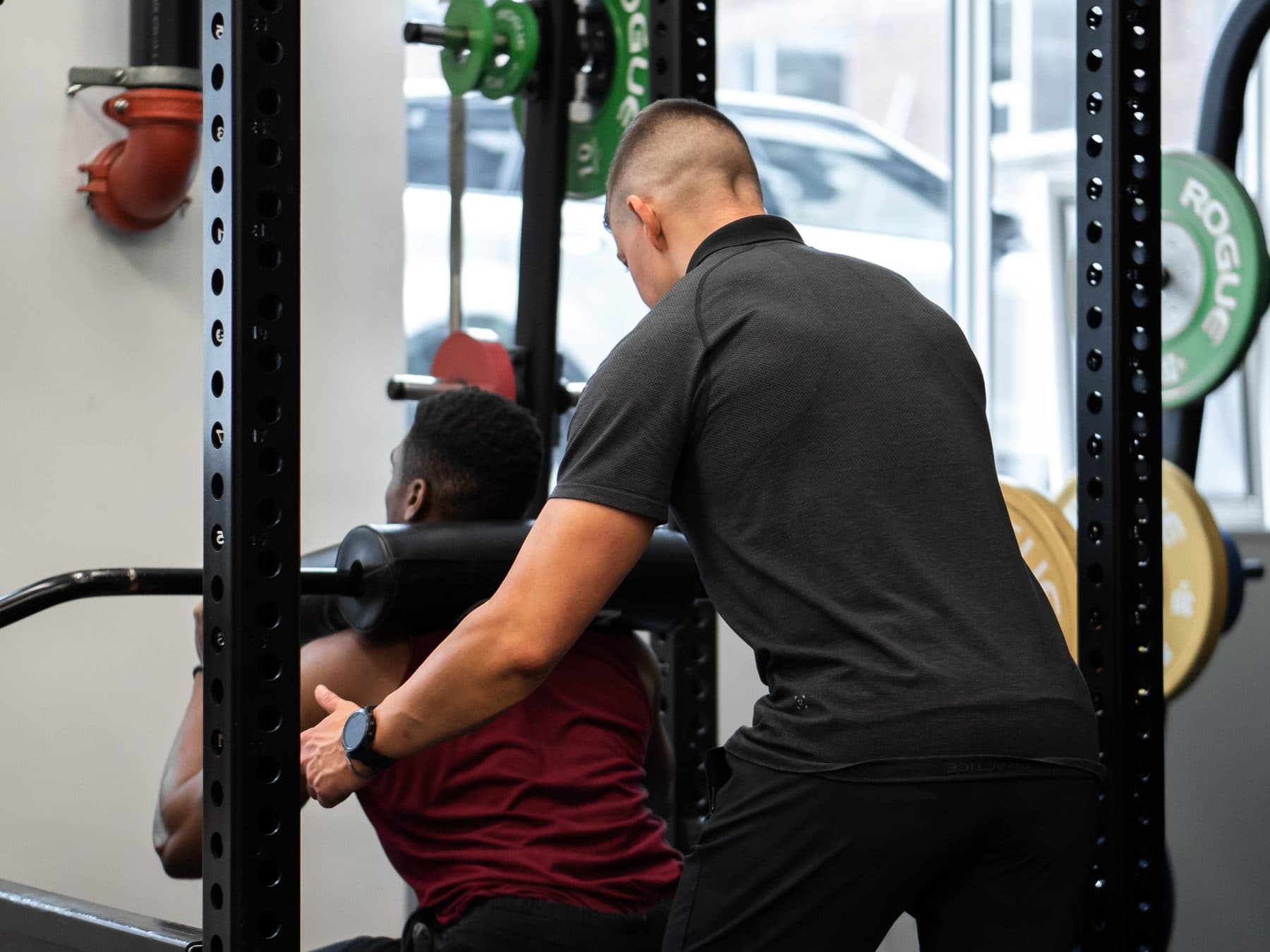
- Build a resistance-training program whose explicit job is protecting the muscle you have
- Plan protein and nutrition around the appetite suppression, not against it
- Change the program when a scan shows lean mass falling — that is the whole point of scanning
- Design the off-ramp: what your training and intake look like after you taper
What Arzadon does not do
- Prescribe, supply, dose, or adjust GLP-1 medication — we are not a medical clinic
- Tell you to start a medication, or to stop one
- Replace the physician managing your prescription; we work alongside them
- Sell you supplements as a substitute for the training or the food
Why Coaching, Not A Meal Plan
A PDF meal plan cannot see that you did not eat today
The hardest part of training on a GLP-1 is not the training. It is that on the days the appetite suppression is strongest, you will eat almost nothing — and a plan written for a normal appetite quietly fails, week after week, while the scan you are not taking would have caught it.
Your coach sees the numbers every two weeks and adjusts to the body in front of them: protein first, in the window where eating is actually possible; training load matched to the energy you genuinely have, not the energy the program assumed.
Book a Free 20-Minute Call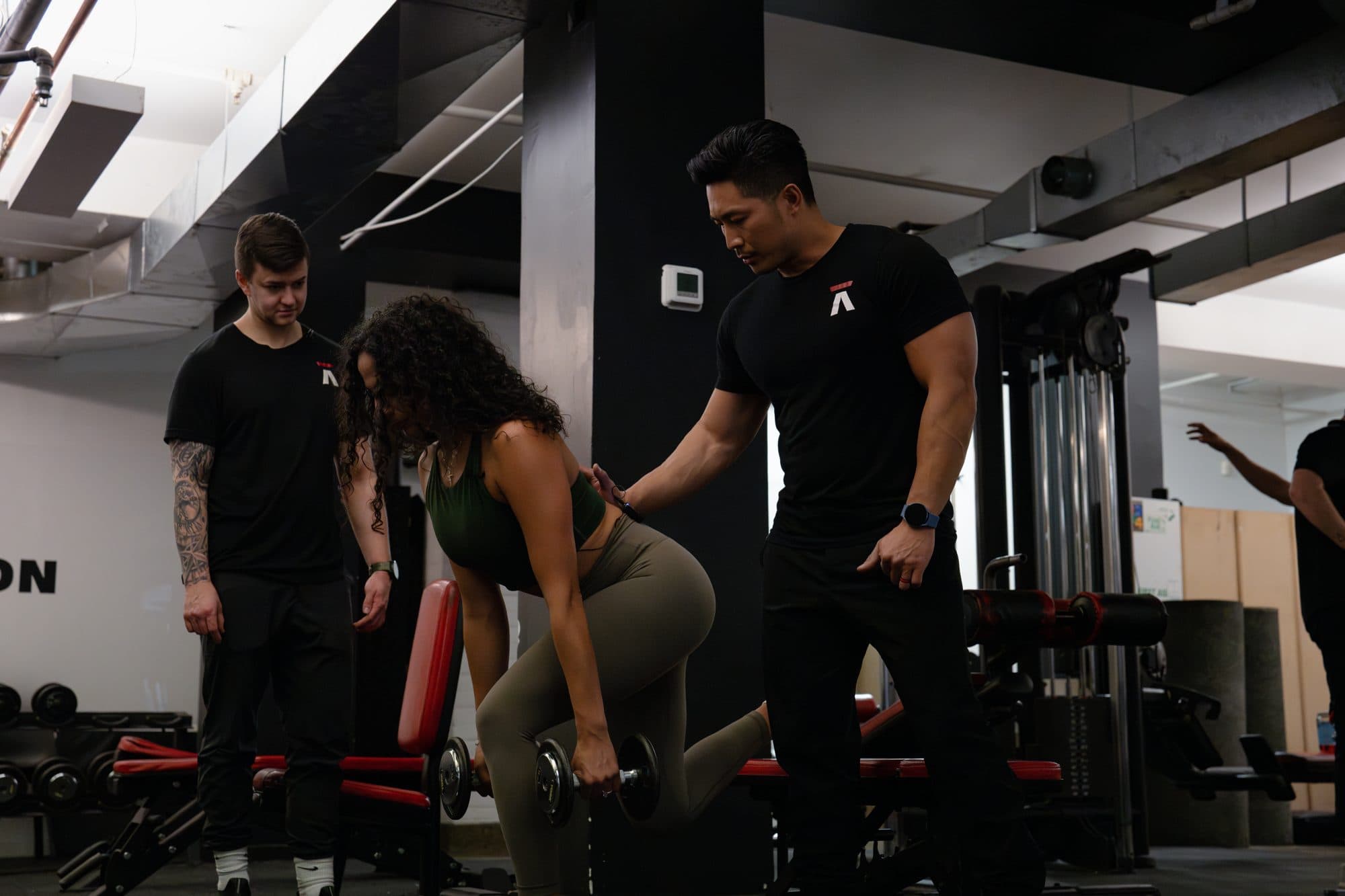
The Science
Why GLP-1 weight loss needs a resistance-training program attached to it
A GLP-1 suppresses appetite, so you eat less and the scale falls. What the scale does not tell you is what came off. In the body-composition sub-study of the STEP 1 semaglutide trial, roughly 40% of the weight lost was lean mass — muscle, not fat. Nothing about the drug distinguishes between the two. That split is decided by whether the body is receiving a reason to keep its muscle, and a strong enough protein supply to rebuild it.
Losing lean mass is not a cosmetic problem. Muscle is metabolically active tissue: less of it means a lower resting energy expenditure, which is precisely the condition that makes weight easier to regain later. In the STEP 1 extension, participants regained about two-thirds of what they had lost within a year of stopping. Resistance training plus adequate protein is the intervention that changes the ratio — and an InBody 770 scan every two weeks is the only way to know, while there is still time to act, which way your ratio is going.
Lean mass
The drug does not protect it — training does
InBody 770 separates fat mass from lean mass, segment by segment. If lean mass is falling, we see it on the next scan and change the program — not six months later when the mirror finally says so.
Resting metabolic rate
Falls with the muscle you lose
Lean tissue burns energy at rest. Give it up during the weight-loss phase and you finish at your goal weight with a metabolism that makes holding it harder than it needed to be.
Protein under appetite suppression
The hardest part of the whole protocol
Appetite suppression is what the medication is for — and it is also the reason most people on one under-eat protein badly. Programming intake around the appetite window is coaching work, and it is where the muscle is actually won or lost.
Frequently Asked Questions
Do you prescribe or supply GLP-1 medication?
No. Arzadon Fitness is a personal training studio, not a medical clinic. We do not prescribe, supply, dose, or advise on medication, and we never tell a client to start or stop one. Your prescription is managed by your physician. What we do is build the training, nutrition, and measurement around it.
Why does muscle matter if I am losing weight?
Because the scale cannot tell you what left. In the body-composition sub-study of the STEP 1 semaglutide trial, roughly 40% of the weight participants lost was lean mass rather than fat. Muscle is metabolically active tissue: losing it lowers your resting energy expenditure, which is exactly the condition that makes the weight easier to regain. It also decides what you look like when you arrive at your goal weight.
Can training actually change how much muscle I lose?
That is the well-established finding in the exercise-science literature on weight loss: resistance training combined with adequate protein substantially reduces lean-mass loss during a caloric deficit. Nothing about the medication distinguishes fat from muscle — the training stimulus and the protein supply do. That is the part we control.
The medication kills my appetite. How am I supposed to eat enough protein?
This is the practical problem, and it is the one your coach spends the most time on. It means eating protein first in the window where you can actually eat, using liquid and low-volume protein sources when solid food is unappealing, and timing intake around the appetite trough instead of pretending it is not there. A generic meal plan fails here. Coaching is the difference.
What happens when I come off the medication?
In the STEP 1 trial extension, participants regained roughly two-thirds of the weight they had lost within a year of stopping. What protects you is what you built while you were on it: preserved lean mass, a training habit that survives the drug, and a maintenance intake you have practised. We design that off-ramp from the beginning, because bolting it on at the end does not work.
Should I tell my coach which medication I am on?
Yes. It changes how we program. Appetite suppression, GI tolerance, hydration, and the energy available for training all shift on a GLP-1, and a coach who does not know is guessing at your recovery capacity. It stays between you and your coach.
How do I start, and what does it cost?
Start with the Transformation Blueprint — $167, roughly 90 minutes at 460 Richmond St W in King West. You leave with an InBody 770 body-composition baseline, a movement screen, and a written program. If you would rather talk first, the 20-minute discovery call is free and there is no obligation.
Clients who kept the muscle
Body composition, not just bodyweight
Review 1 of 5: Lucas Farrauto
Find out what you are actually losing.
One InBody 770 scan separates the fat from the muscle. Everything we do for you starts from that number.